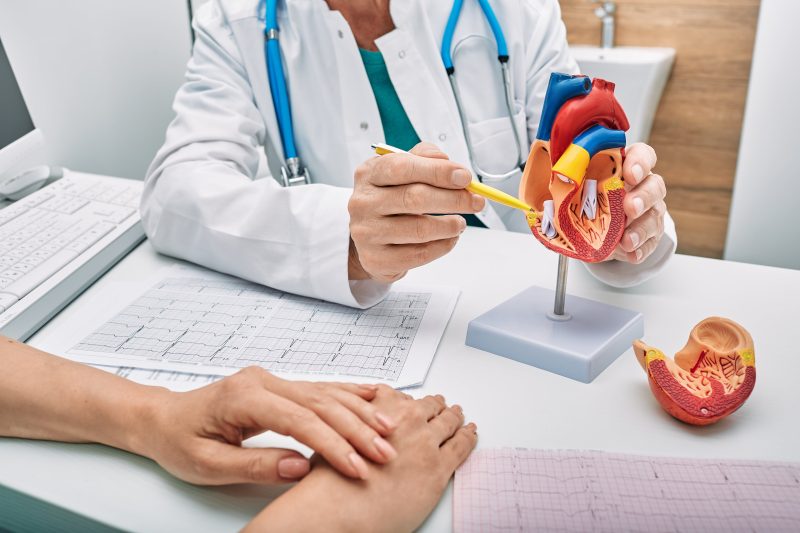
Cardiology is a subspecialty of internal medicine that focuses on diagnosing and treating cardiovascular conditions — including heart muscle and valve diseases, heart failure and coronary artery disease. Our specialists perform and interpret diagnostic tests and determine the necessary treatment procedures.
When should you see a cardiologist?
Preventive cardiac screening is recommended even without symptoms, especially after age 40 — or as early as 20–30 with predisposing factors. The following symptoms warrant prompt examination:
- Chest pain, pressure or tightness — especially during exertion
- Unusually strong heartbeat, rapid or very slow pulse
- Shortness of breath, difficulty breathing
- Unexplained fatigue
- Excessively high or low blood pressure
- Dizziness, weakness, occasional loss of consciousness
- Swelling of the lower limbs
- Family history of heart disease or sudden cardiac death
Key risk factors
Cardiovascular diseases often develop from a combination of several factors:
- High blood pressure
- Smoking
- High cholesterol
- Diabetes
- Sedentary and highly stressful lifestyle
- Hereditary factors
- Significant overweight
- Excessive alcohol consumption
What conditions do we diagnose?
Blood pressure problems — Hypertension affects more than a quarter of adults; its main danger is prolonged asymptomatic progression. Early detection is crucial for preventing stroke, atherosclerosis, heart attack and kidney disease.
Heart rhythm disorders — Irregularities in the heart's normal rhythm, including tachycardia (100+ beats/min), bradycardia (below 60 beats/min), and atrial fibrillation.
Coronary artery disease — Narrowing or blockage of the coronary arteries reducing oxygen supply to the heart muscle, potentially leading to heart attack.
Heart failure — A condition where the heart cannot pump blood efficiently. Symptoms include shortness of breath, fatigue, leg swelling and rapid pulse.
Heart valve problems — Stenosis or insufficiency reducing blood flow, which may lead to heart failure or arrhythmias.
Inflammatory heart diseases — Caused by viral or bacterial infections or autoimmune conditions, with symptoms including chest pain, breathlessness and fever.
What examinations do we perform?
Electrocardiography (ECG) — Resting ECG provides information about heart rhythm and abnormalities. Stress ECG monitors heart reactions during exercise on a treadmill or bicycle.
Cardiac ultrasound (echocardiography) — Imaging of the heart's structure, function and blood supply. Painless and radiation-free.
24-hour Holter monitoring — A portable monitor worn throughout the day recording heart rhythm during daily activities.
24-hour blood pressure monitoring (ABPM) — An automatic device measuring blood pressure at set intervals, providing a detailed picture of daily fluctuations.
What happens during the examination?
The examination begins with medical history: the specialist asks about your complaints, previous conditions, medications, family history of heart disease and lifestyle. This is followed by physical examination, then ECG, cardiac ultrasound, Holter monitoring or ABPM as needed.
How to prepare
Please bring all previous medical documentation, particularly previous cardiology results and a list of current medications.
Why choose IRIS Medical for cardiology?
Our cardiology practice features experienced specialists and state-of-the-art diagnostic equipment. We provide personalised care, attending to both medical history and individual patient needs to develop an appropriate treatment plan.
Please contact us with confidence for cardiovascular complaints or preventive screening.